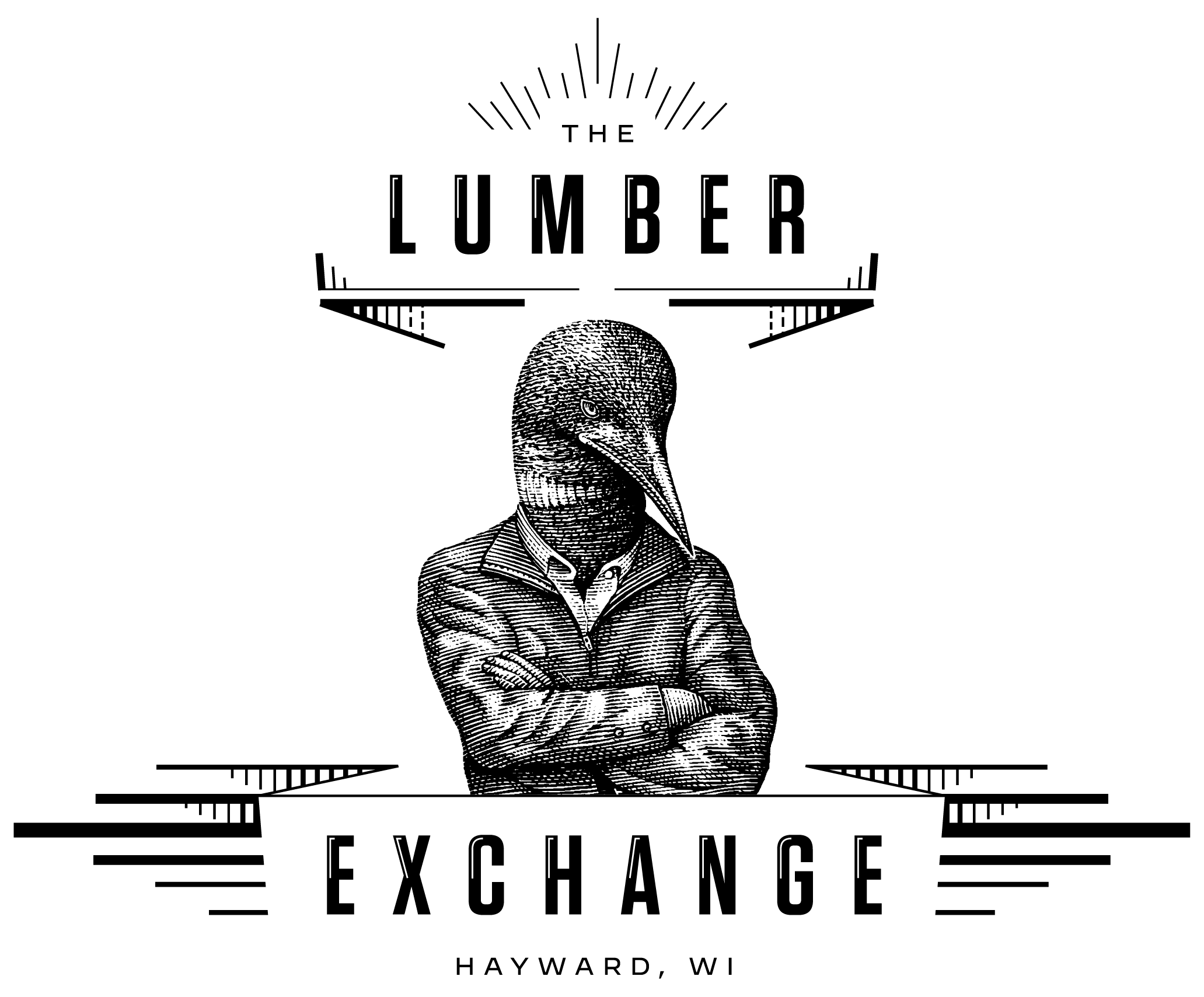
Composition 01
Primary woodcut — hero signage, large-format applications, restaurant menus
03 / Visual Identity
The brand’s marks — woodcut illustrations, wordmark, icon, and the rules for how all three behave together on screen, in print, and on buildings.
The system
The Illustrative Mark is the brand’s most distinctive asset — a series of woodcut compositions that put the workday and the Northwoods in the same frame. The Wordmark is our typographic signature. The Brand Icon is the shorthand. The Axe is a quiet secondary mark we use to anchor texture and craft. Together they make a system that scales from a favicon to a thirty-foot sign.
Primary — the Illustrative Mark
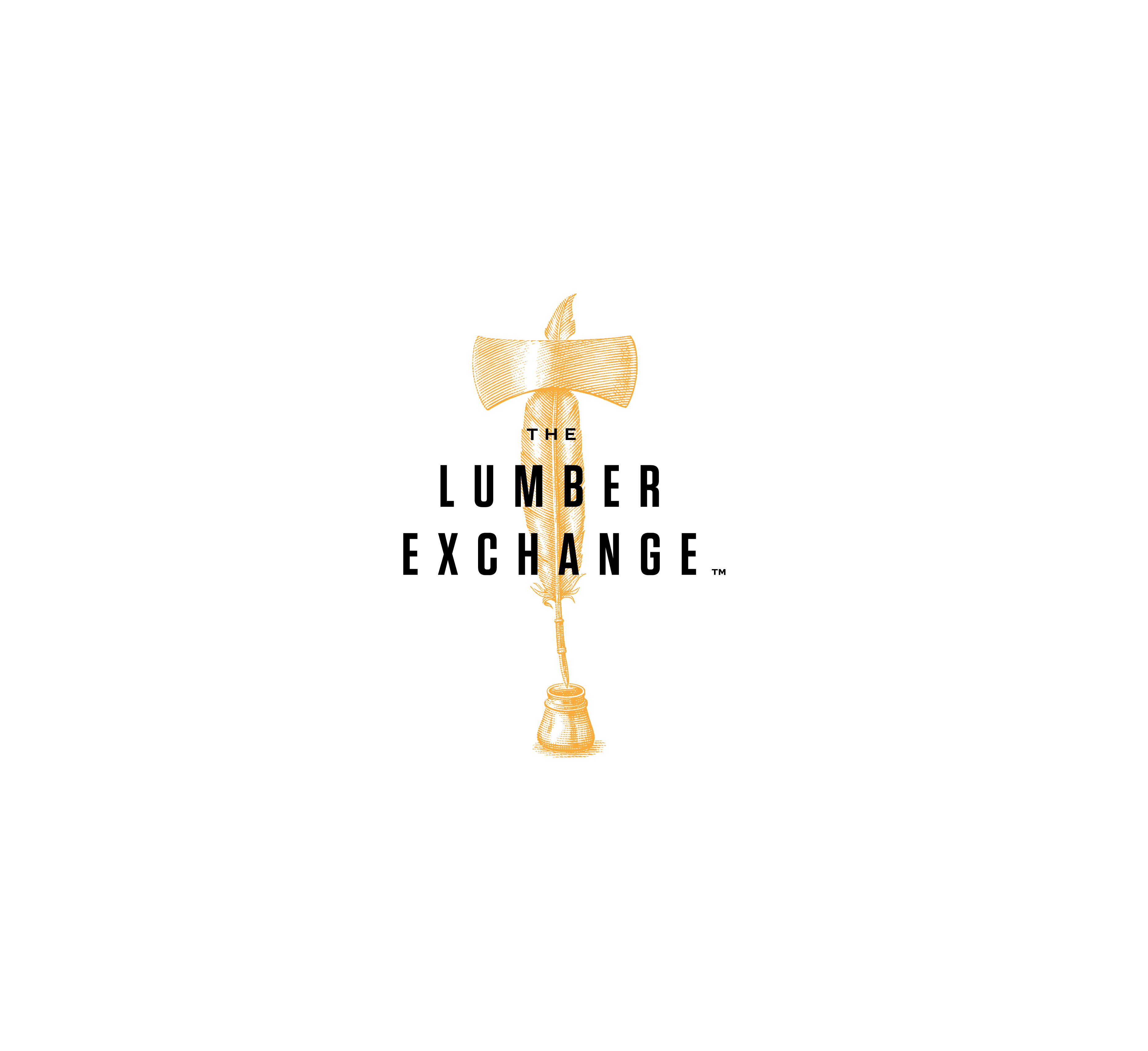
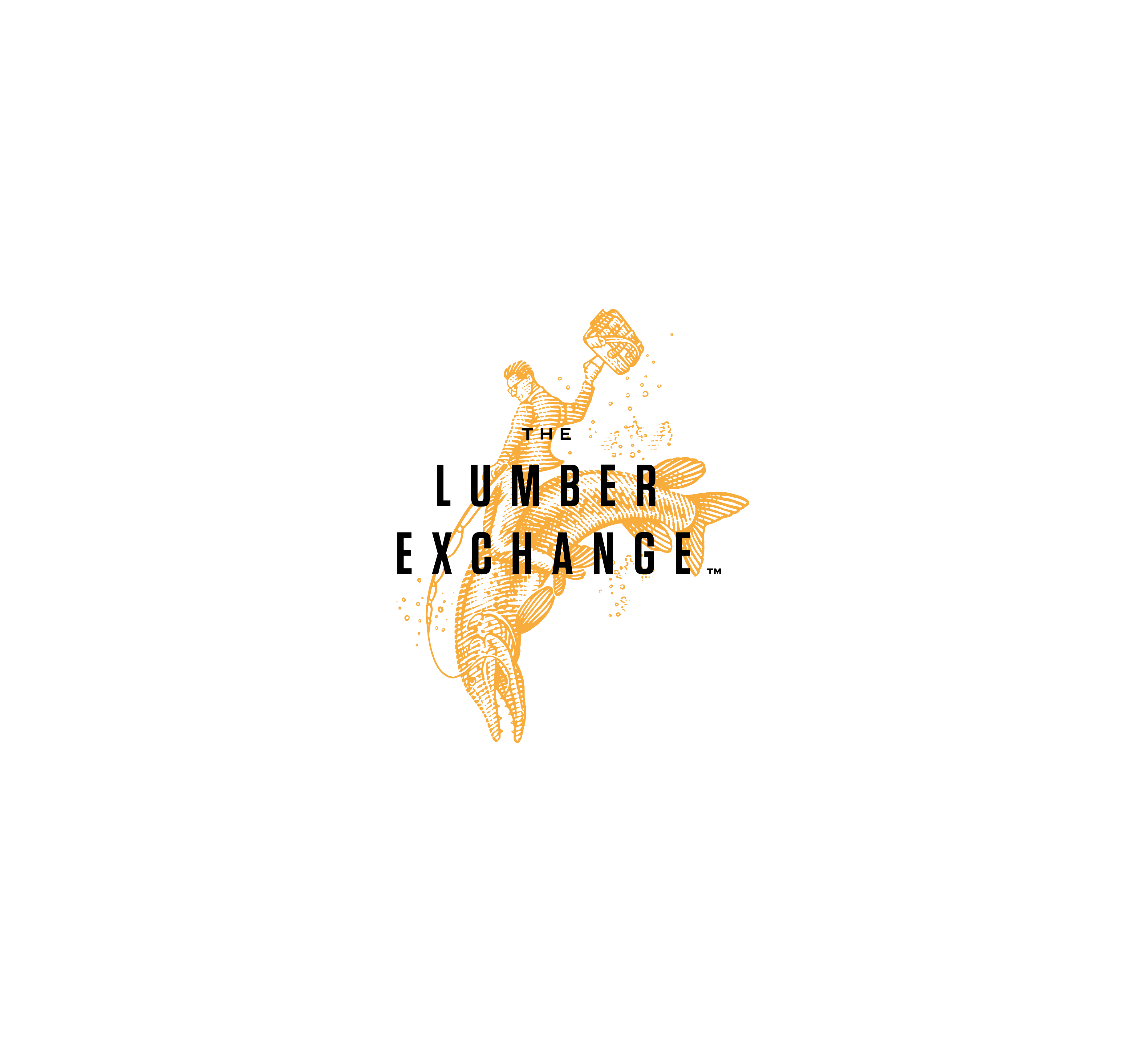
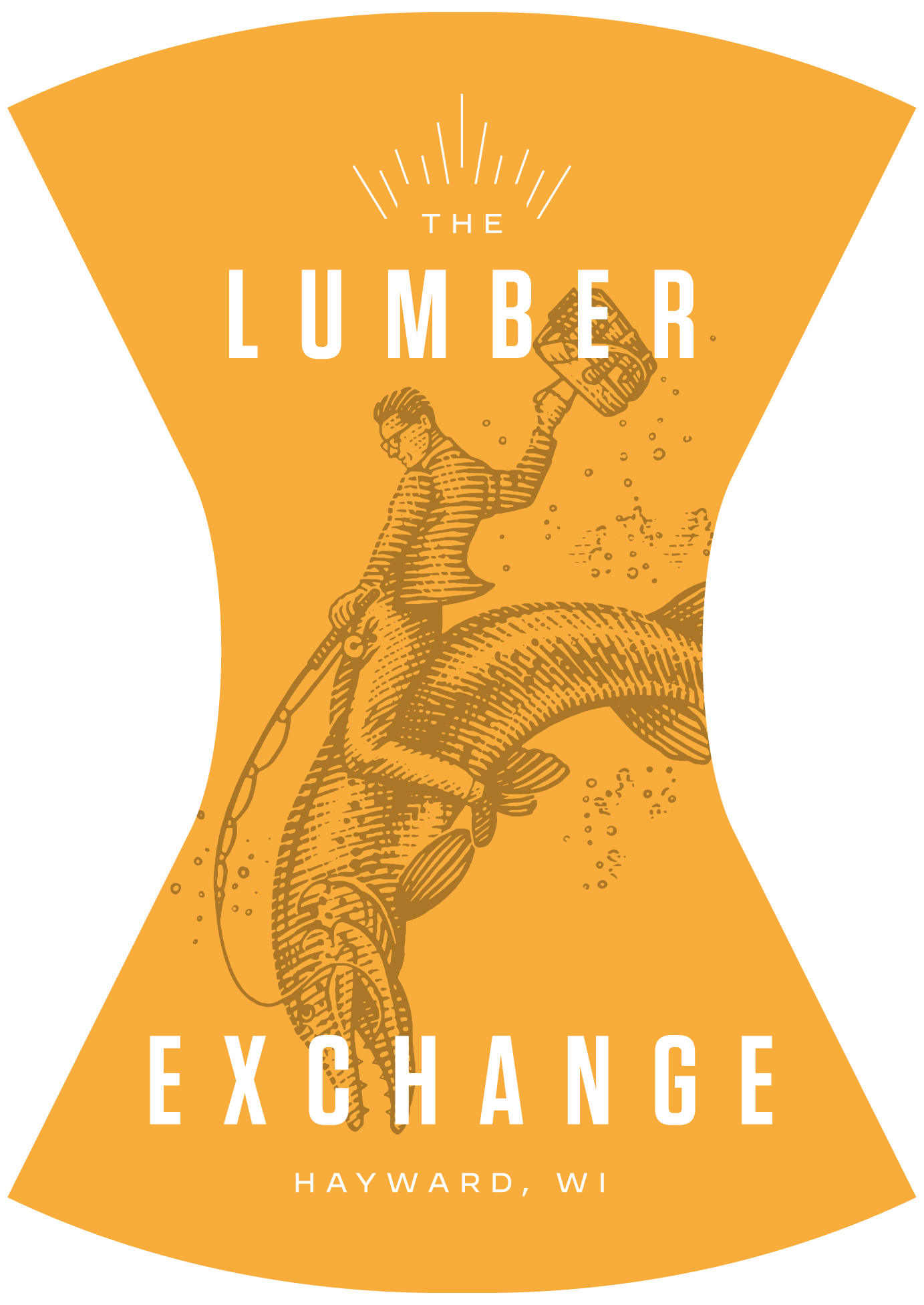
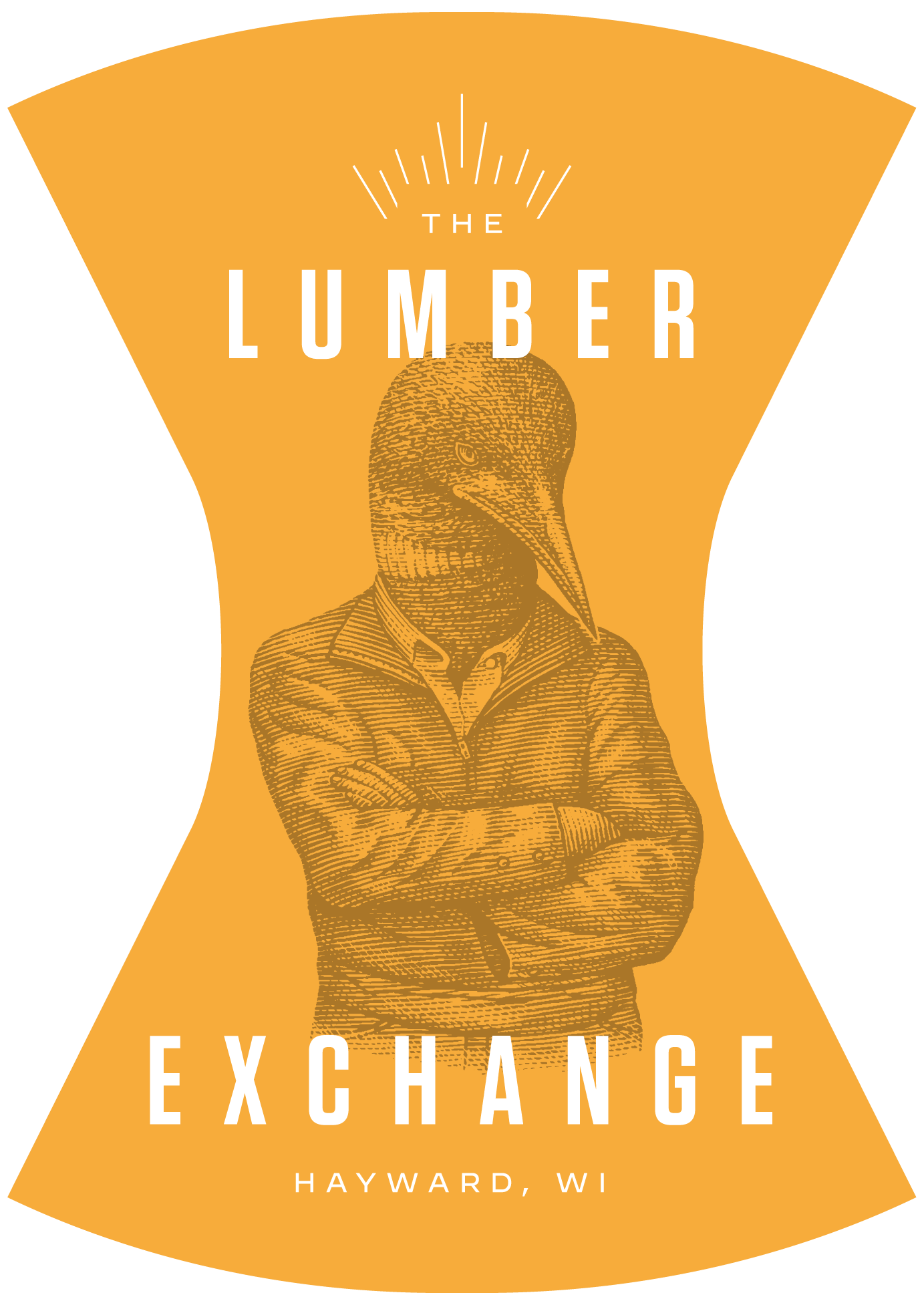
The Lumber Exchange’s primary visual identity is a set of woodcut-style illustrations. Each one is a small narrative — work and the wild rendered in the same hand, in the same stroke, on the same page. A laptop on a coffee-stained table next to a pine. A morning view from the deck with a notebook in the foreground. These aren’t decorations under the wordmark; they are the brand at its most distinctive.
The four compositions below are the founding set. The illustration system is designed to grow — over time we’ll commission new woodcuts for menus, building signage, packaging seals, member-card backs, founding-class kits, seasonal campaigns, and any moment where the brand earns the canvas. New compositions should be commissioned through the brand team, not improvised. The line is consistent; the subjects are not.
Where to use them: large-format signage, restaurant and café menu boards, wall installations, exterior banners, large-format printed collateral, hero moments on web and social, packaging, and event signage. Anywhere the brand has the room to speak in full sentences instead of initials.
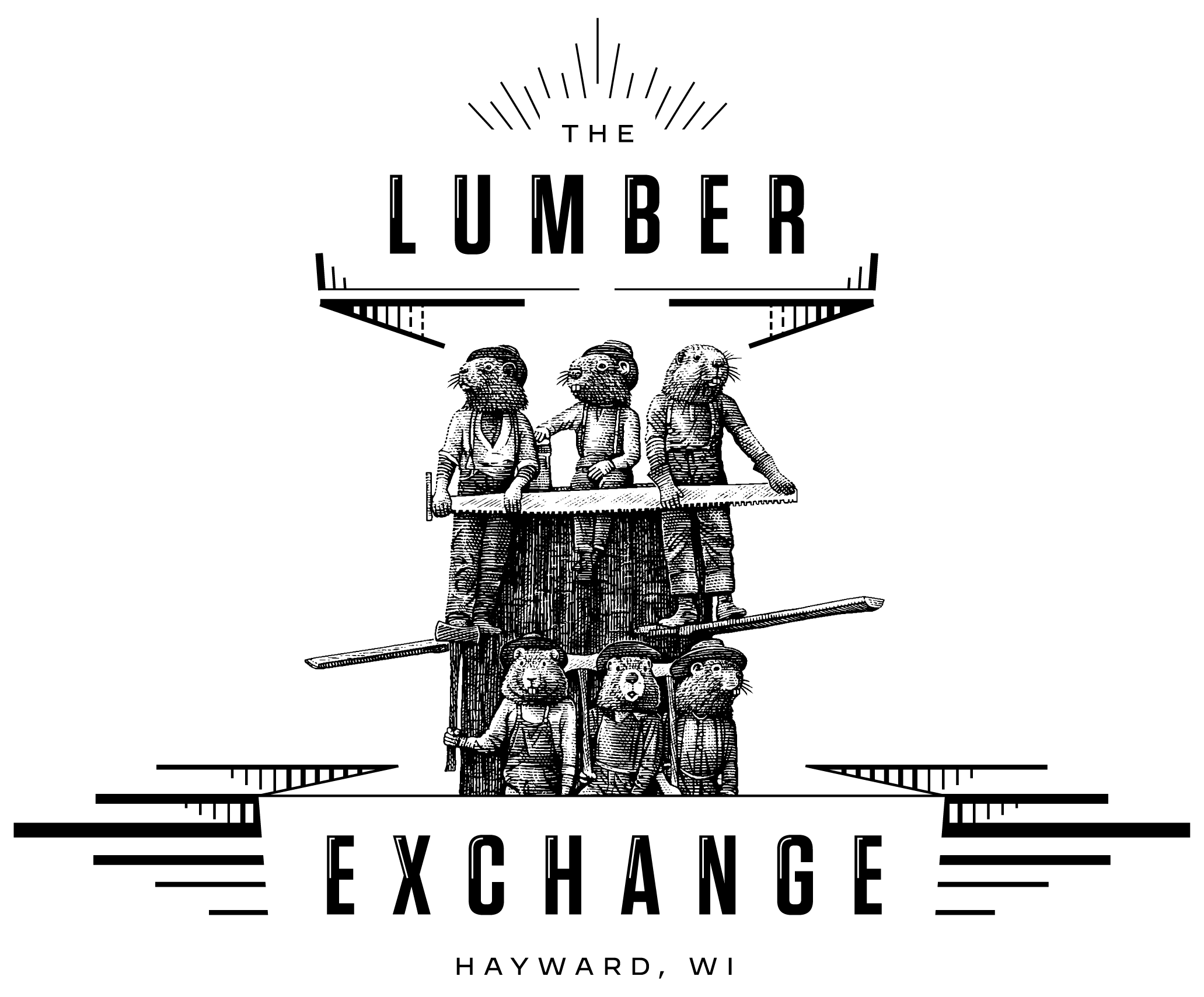
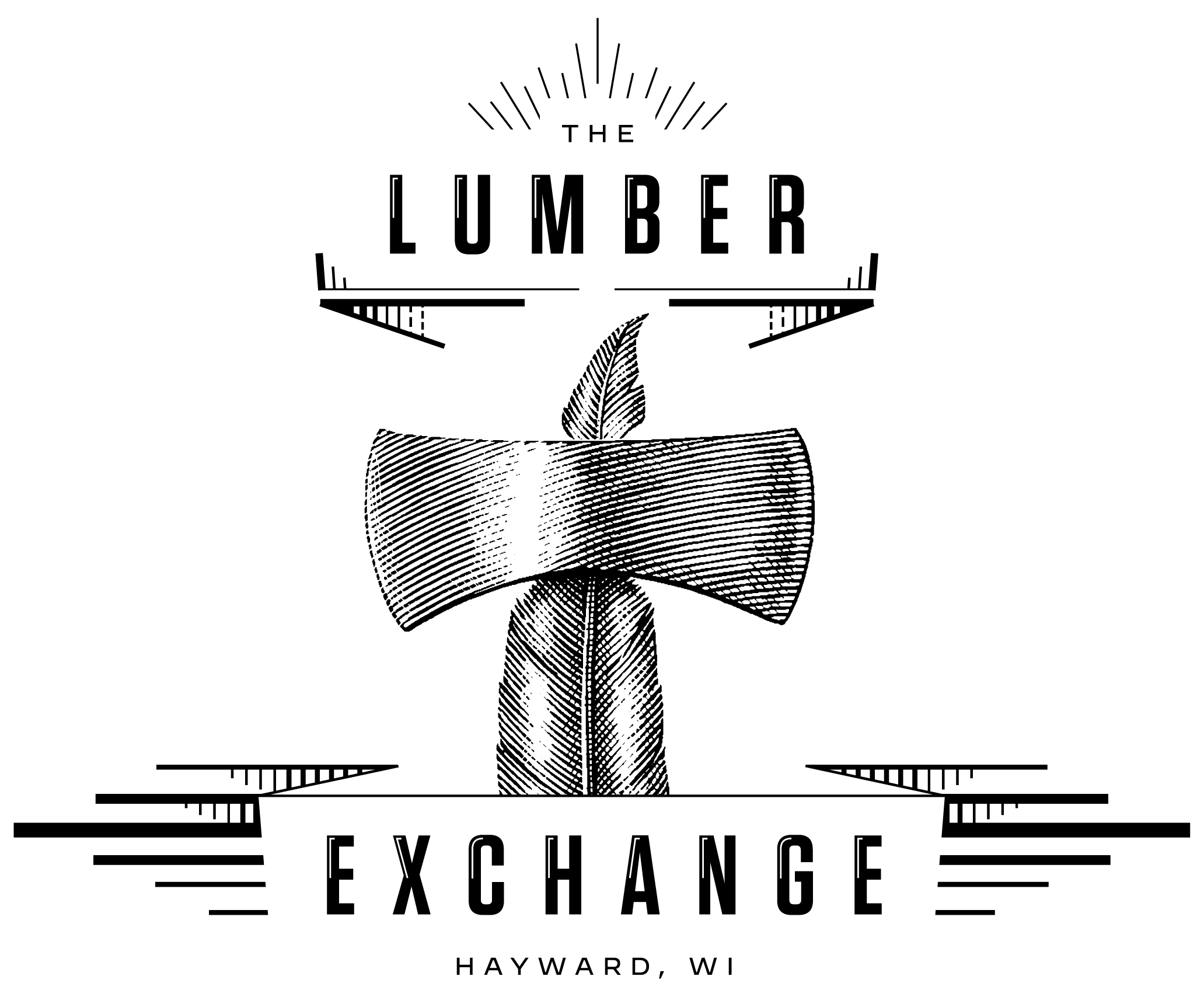
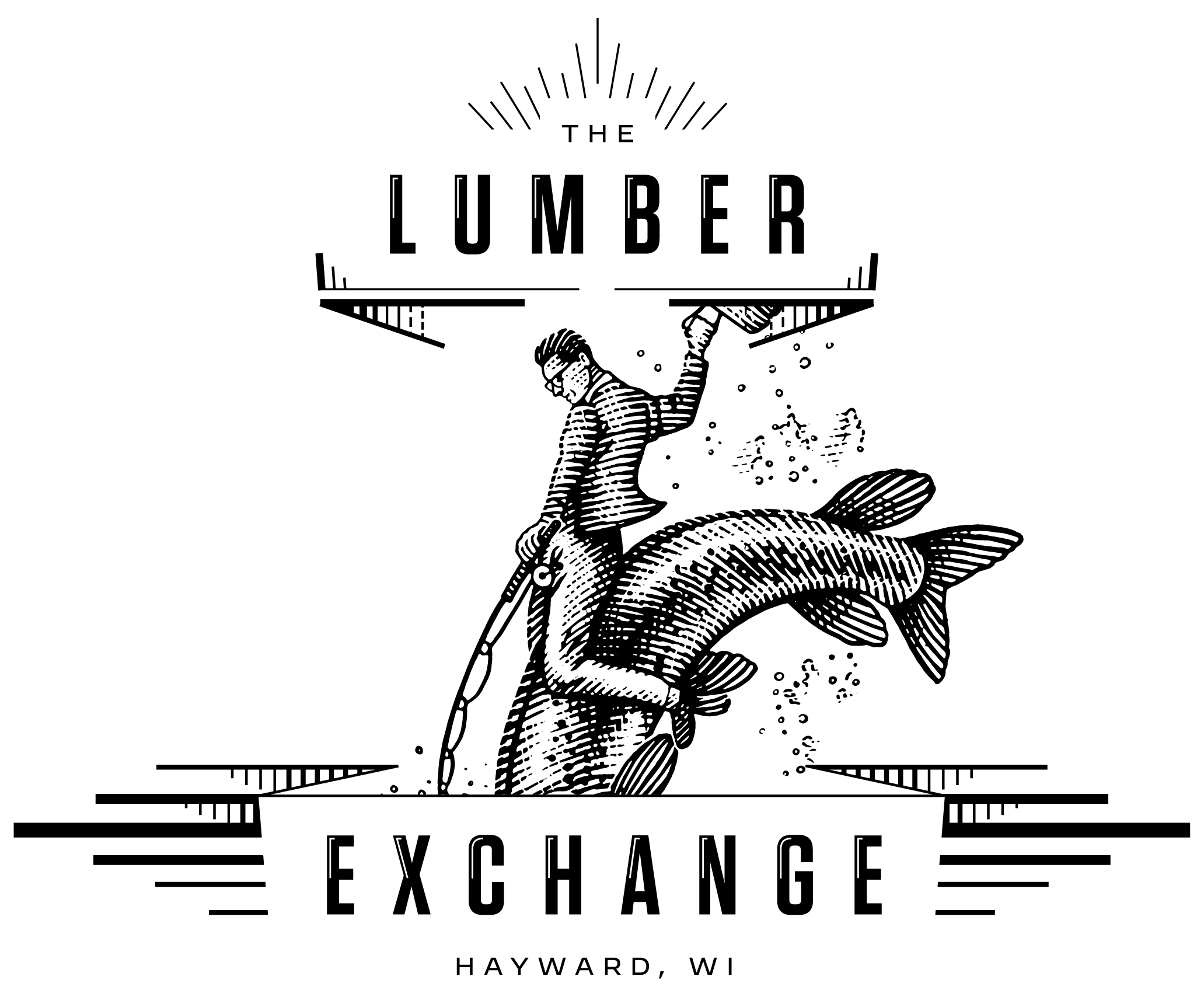
Four compositions today. The library will grow — new commissions are tracked by the brand team and added here as they ship.
Secondary — the Wordmark
The Wordmark is our typographic signature, set in Tungsten Semibold. Use it any time the context calls for the brand to identify itself in plain language — page headers, document covers, footer credits, navigation, business cards, signed announcements. It is the second-most-important mark after the Illustrative Mark.

Shorthand — the Brand Icon
The Brand Icon stands in for the Wordmark when the wordmark would be illegible — favicons, social avatars, app icons, monogrammed lockups. Use it any time the Wordmark would render below 96 px wide on screen.



Small variations
Small-form adaptations of the brand mark for tight contexts — UI chrome, favicons, stickers, embroidery, embossing, member-card faces. Each variation has its own purpose; consult the brand team before applying one in a new context.
On paper
On bark


Distinctive secondary — the Axe
The Axe is the brand’s most distinctive small-mark accent. It’s a direct nod to Hayward’s lumber and logging heritage, rendered in two amber and bronze tones that read as material — like a real object catching light from above. It is never a replacement for the Wordmark or the Illustrative Mark in a hierarchy position. It’s the brand’s seal, its stamp, its initial.
Use it for wax seals, member-card backs, packaging stamps, signage corners, anywhere the brand needs to mark its territory in a single shape. Use it sparingly — the Axe loses its power if it appears next to every block of copy.
Clear space & minimum sizes
Clear space
Keep a margin equal to the cap-height of the Wordmark (or the full height of the Brand Icon when used alone) on all sides. Nothing — not type, not illustration, not photo edge — crosses that boundary.
Minimum sizes — Wordmark
Minimum sizes — Brand Icon
Light / dark usage
Do
Don’t