07 / Graphic System
Graphic System
The supporting visual language — layout, texture, illustration, and the small details that hold everything else together.
Layout principles
Generous margins, decisive grids, one focal point.
- Grid: 12-column on desktop, 4-column on mobile. Gutter: 24 px / 16 px.
- Margins: Default page padding is generous — let the brand breathe. Tight margins read as cheap; ours don’t.
- Focal point: One per composition. If a piece has two competing headlines, the design is wrong, not the copy.
- Asymmetry over symmetry. Pages should feel composed, not centered.
- Hairlines, not boxes. Use 1 px dividers instead of card-on-card containment whenever the structure allows.
Texture & pattern
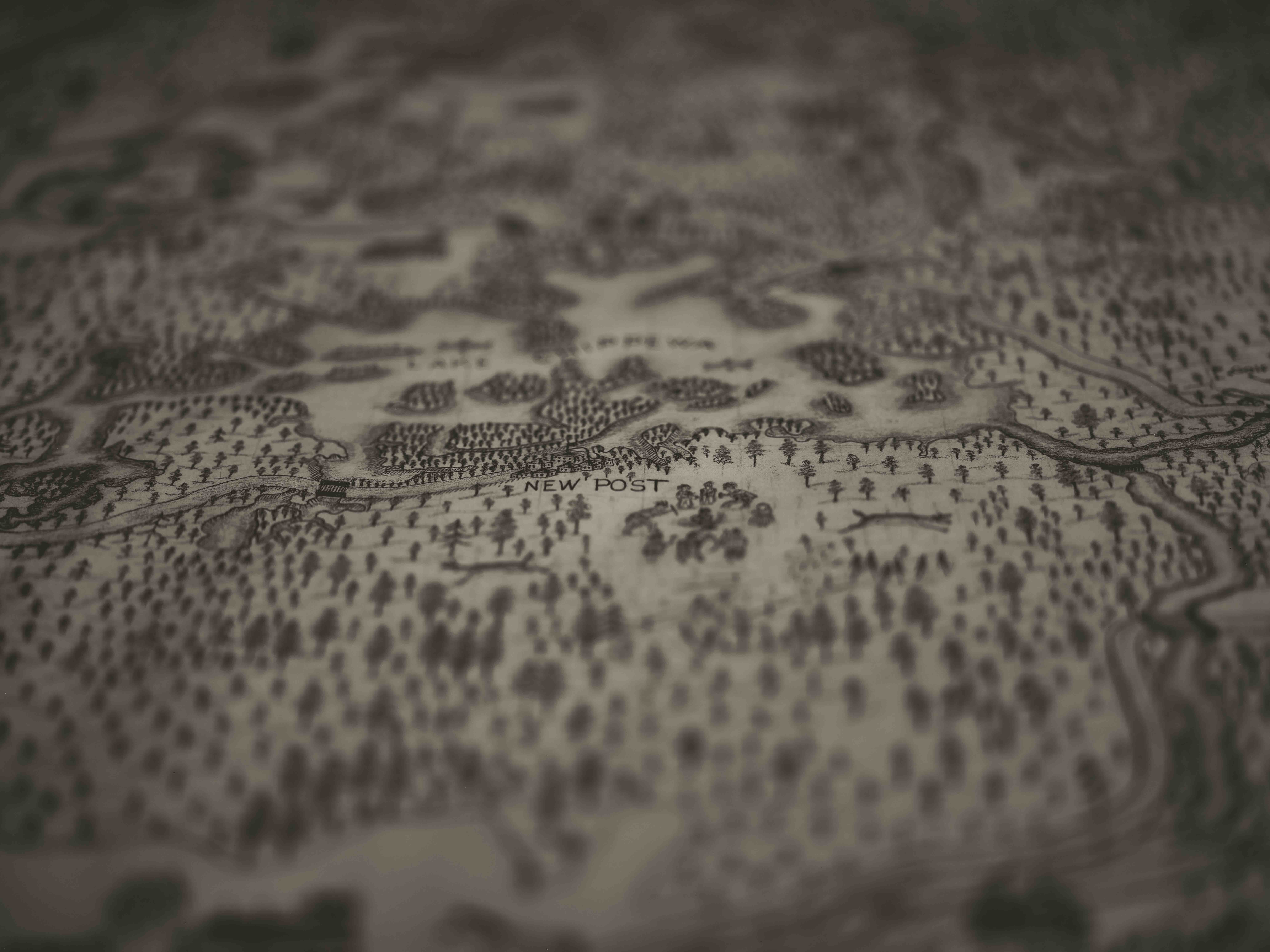
Paper, newsprint, axe — used in tiny doses.
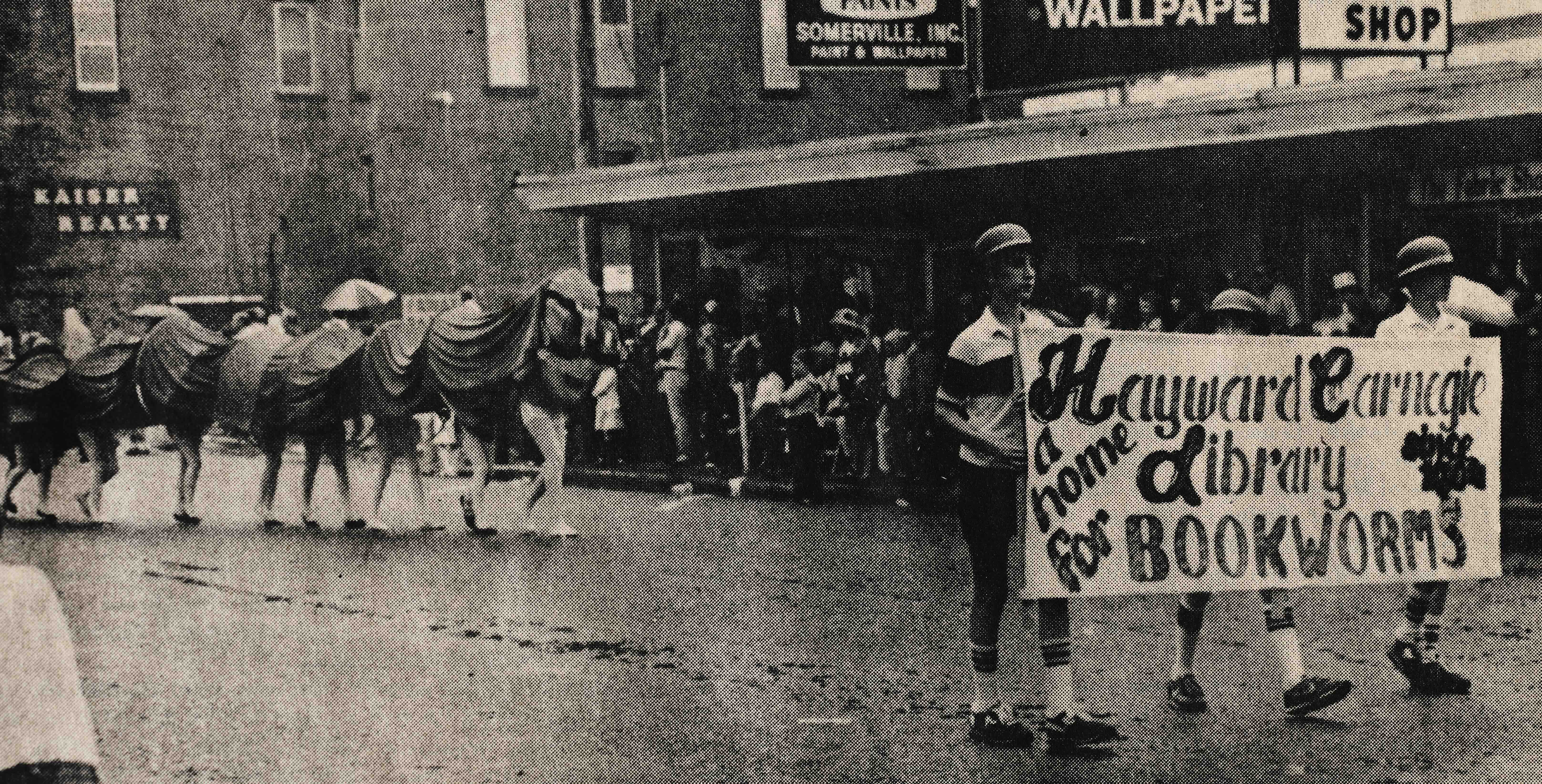
The brand has three primary texture sources: warm paper (the canvas color), Sawyer Museum newsprint (heritage), and the axe motif (distinctiveness). Use any of them in small doses to add depth — never as wallpaper. If a viewer notices the texture before the message, the texture is too strong.
Icons
Sharp corners. 1.5 px stroke. Bark, never Amber.
For UI iconography, use a 24 × 24 grid with a 1.5 px stroke, square caps, square joins, and no rounded corners. Icons sit in Bark or Bark-60 — never in Amber, never in River, never filled.
A full library is on the roadmap. For now, base any new icon on these proportions, or use Lucide as a temporary library — restyled to match the stroke and corner rules above.
Rules & dividers
Hairlines, generous space, never decoration.
1 px on paper edge — between sections
Bark on paper-warm — between cards in a list
Amber accent — only at the start of a marquee section, never internal dividers
Print collateral
Stocks, weights, and finishes.
- Business cards: Uncoated 18-pt cotton or recycled stock in Paper. Bark print, no foil for v1. Foil is reserved for founding-member kits and the lobby installation.
- Letterhead: Uncoated 80# text in Paper. Bark print. Single hairline divider 18 mm from top.
- Signage paint: Match Bark to Pantone Black 6 C, Amber to a Pantone match still TBD. Outdoor: anti-graffiti satin clear coat.
- Newsletter / member print: Newsprint or Munken Lynx Rough, single color (Bark), with one Amber accent per spread.
Social templates
Three templates, used in rotation.
01 / Marquee
A new dawn on Main Street.
Tungsten dominates. Paper canvas. One thought.
02 / Photo overlay
“Mornings begin not with alarms but with the soft serenades of loons echoing over placid lake waters.”
Bark plate. Decimal Book. Photo behind, dimmed to 40%.
03 / Specific moment
Coffee at 6:30. Lake at 7. Desk by 8.
Three short lines. Used for daily-rhythm storytelling.
The brand in the wild
Paper, ceramic, cotton, steel, screen.
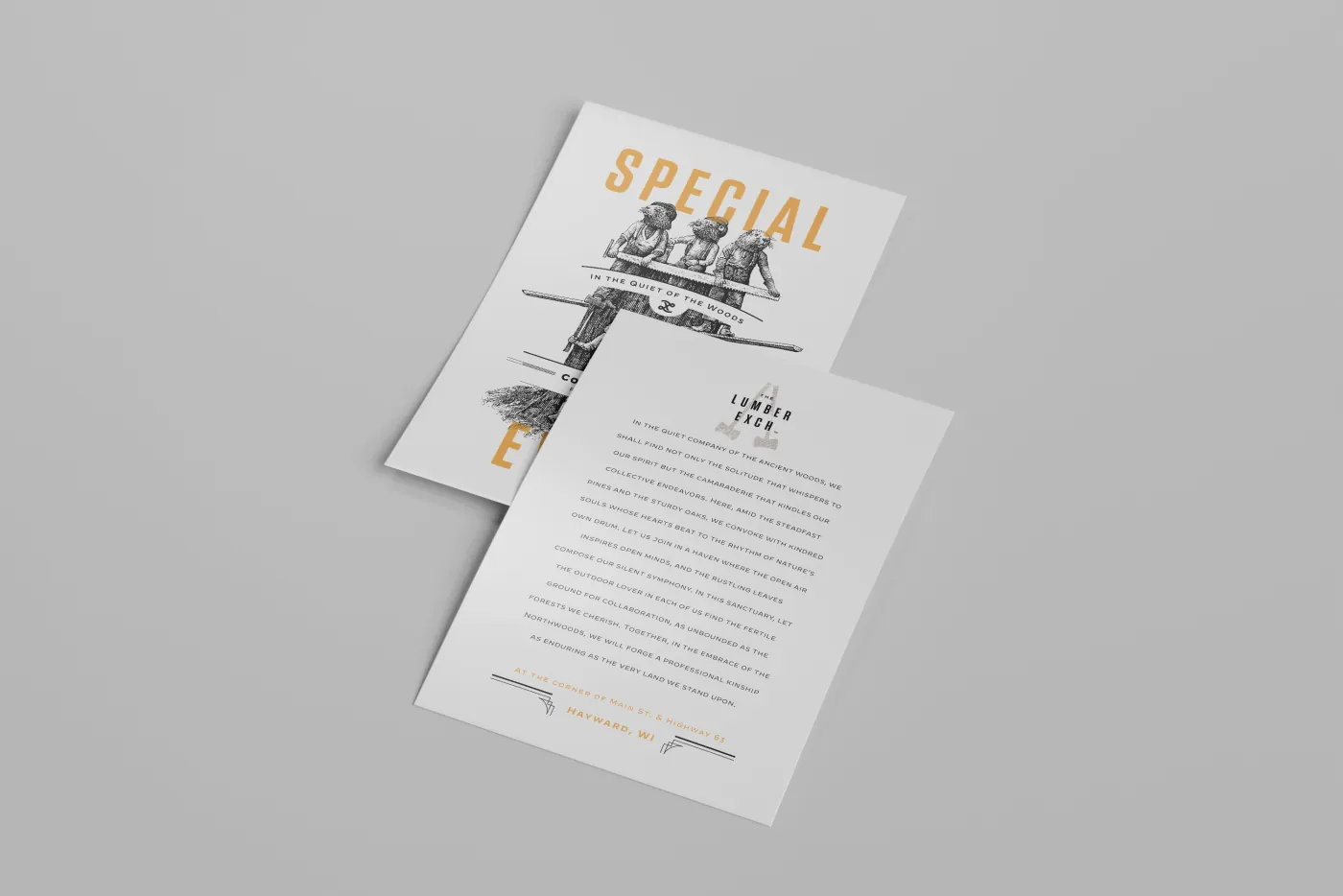
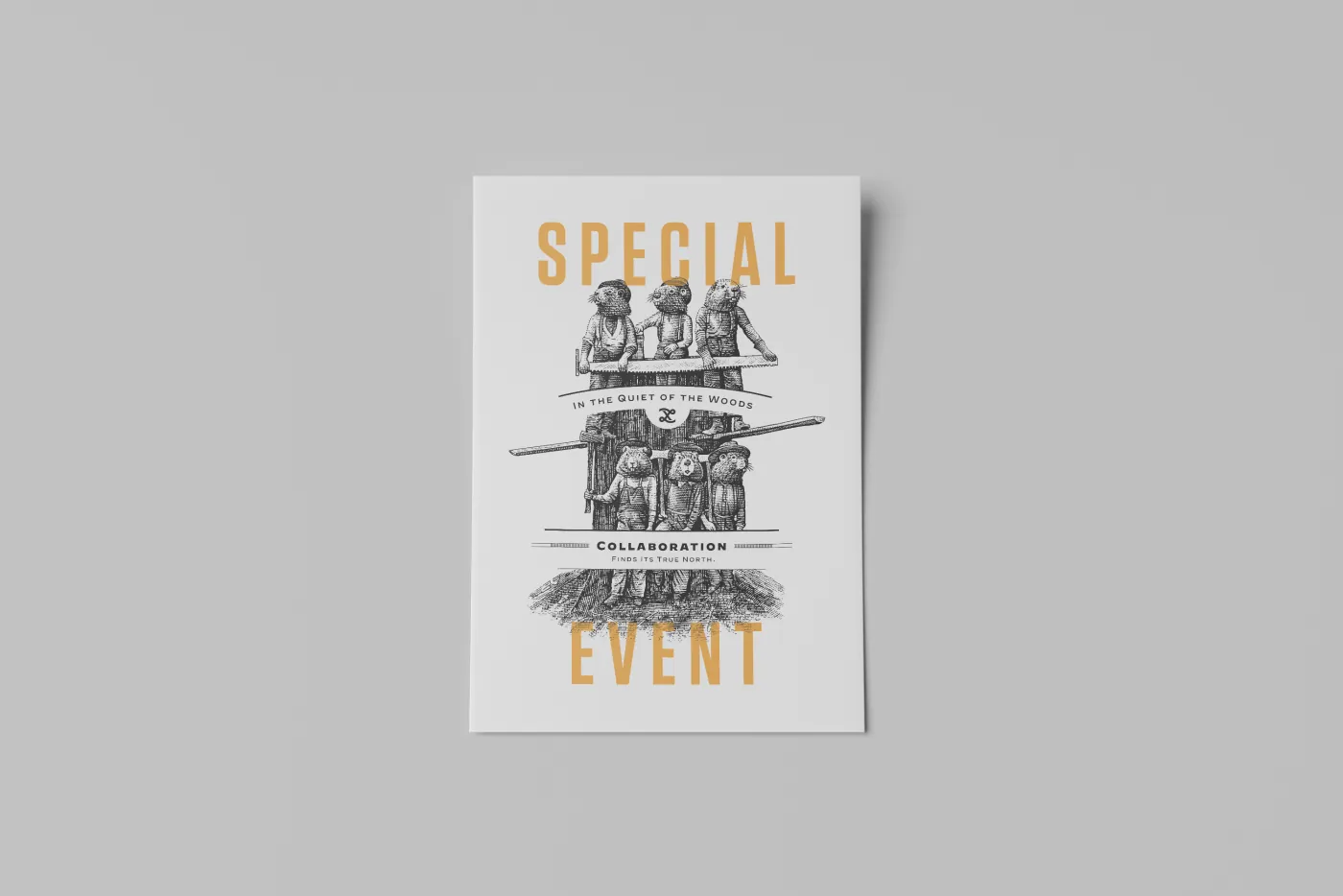
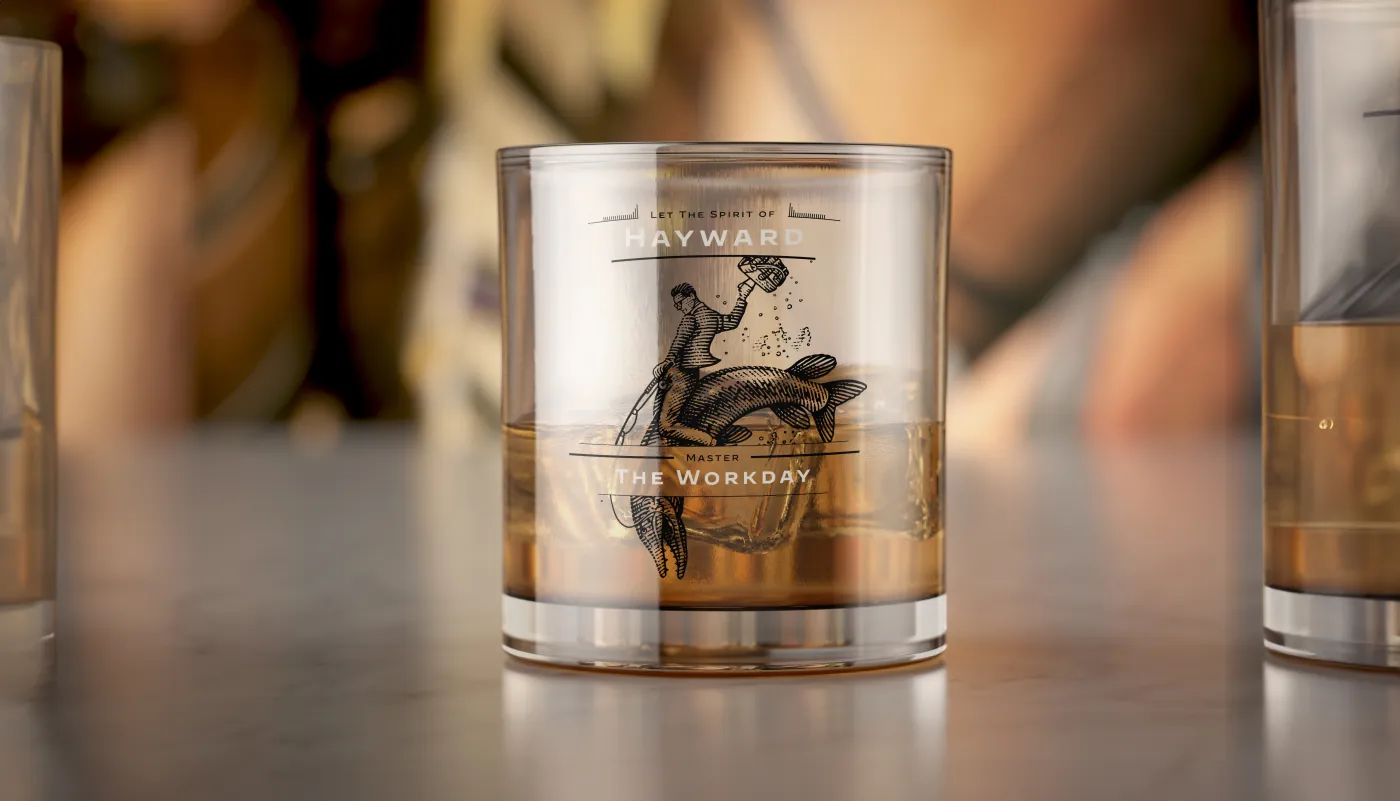
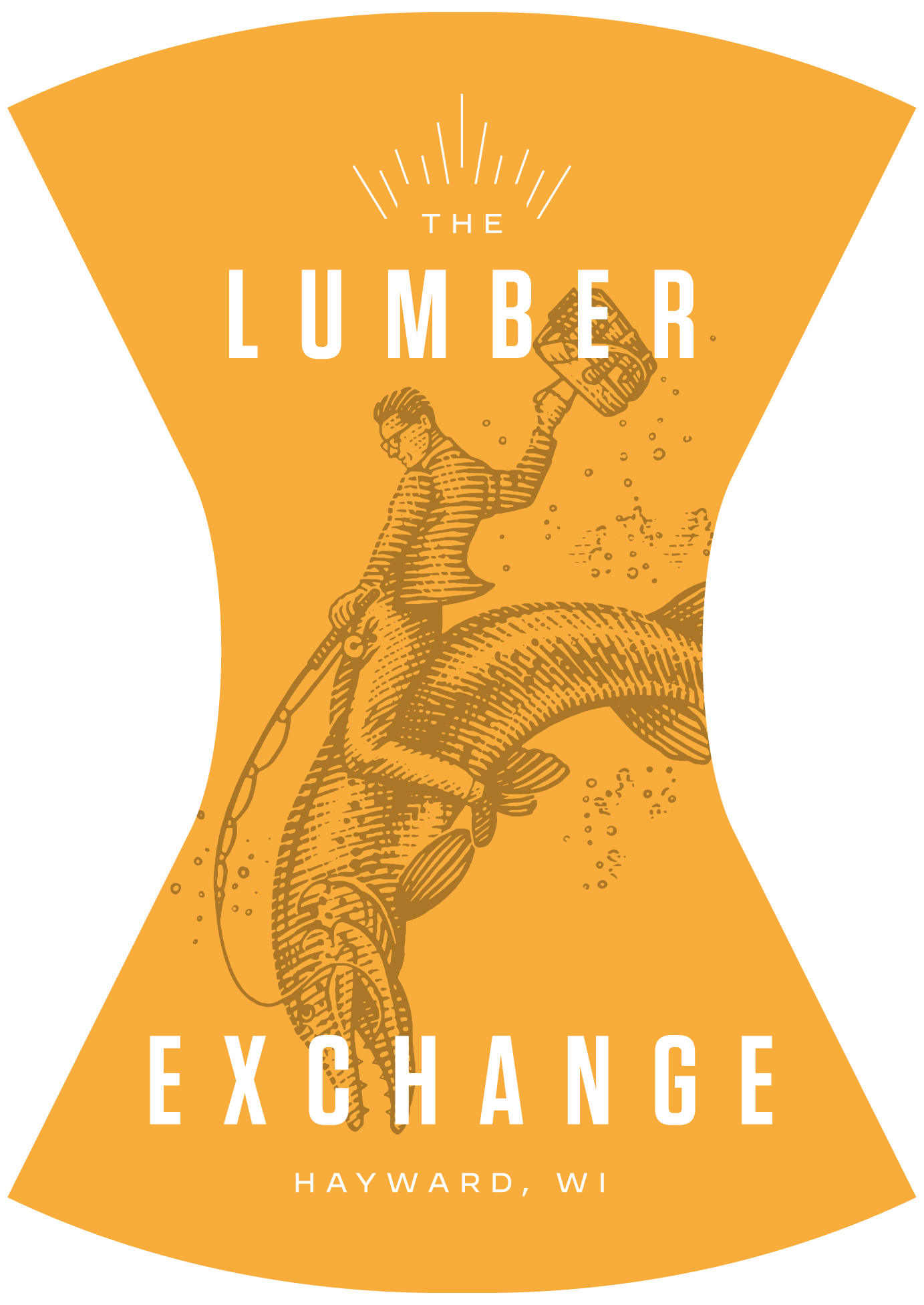
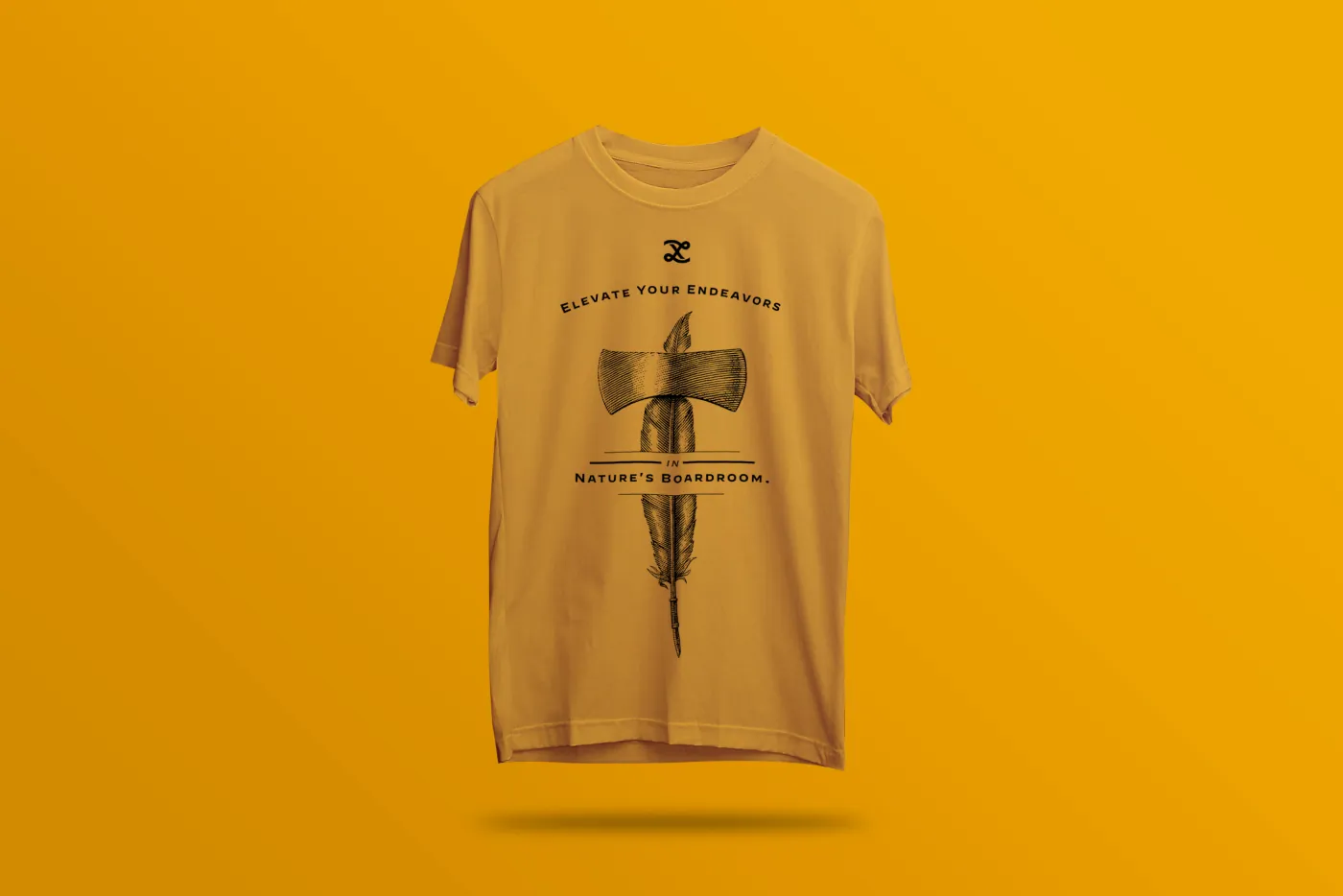
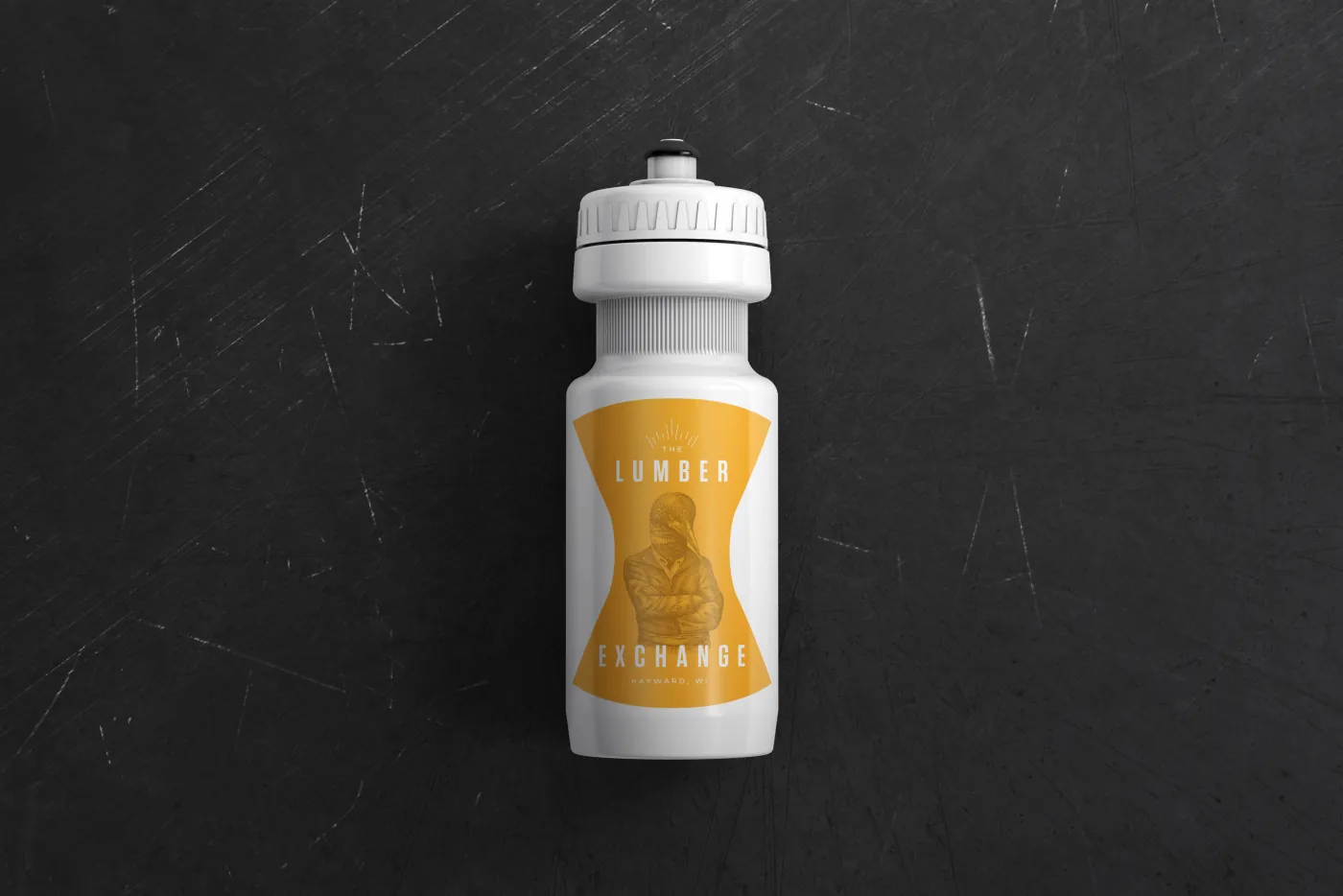
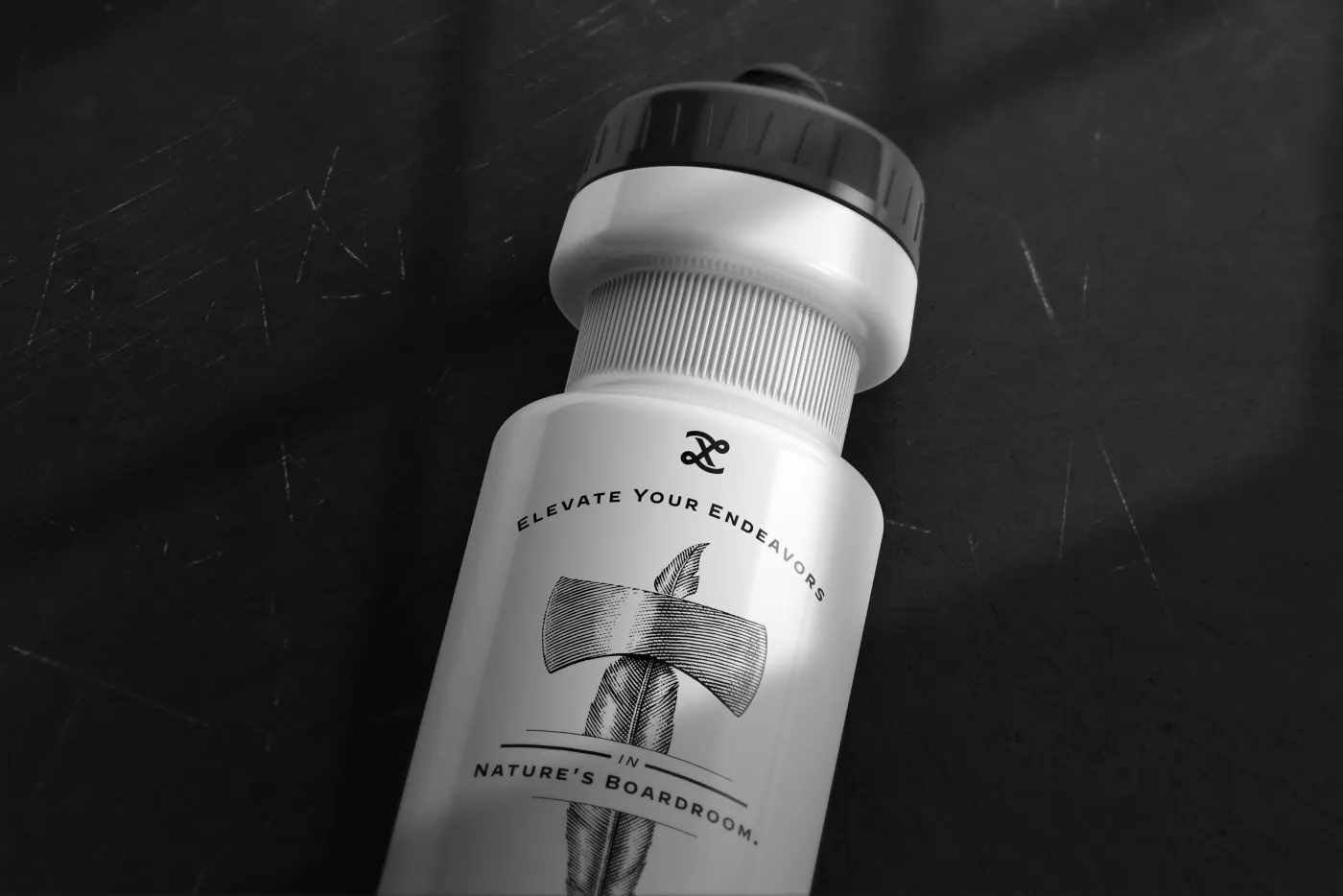
These are early studies of the brand applied across the surfaces it will live on — a poster on a wall, a coffee mug in someone’s hand, a tee on the back of a member, a water bottle on the trail, an app in someone’s pocket. They aren’t final products. They’re proof that the system holds together when it leaves the page.
A few rules carry across all of them: one mark per surface — never the wordmark and the Axe together; generous clear space; and the canvas is the brand — Bark or Paper, never a third background color.
Featured · 01 — The Poster
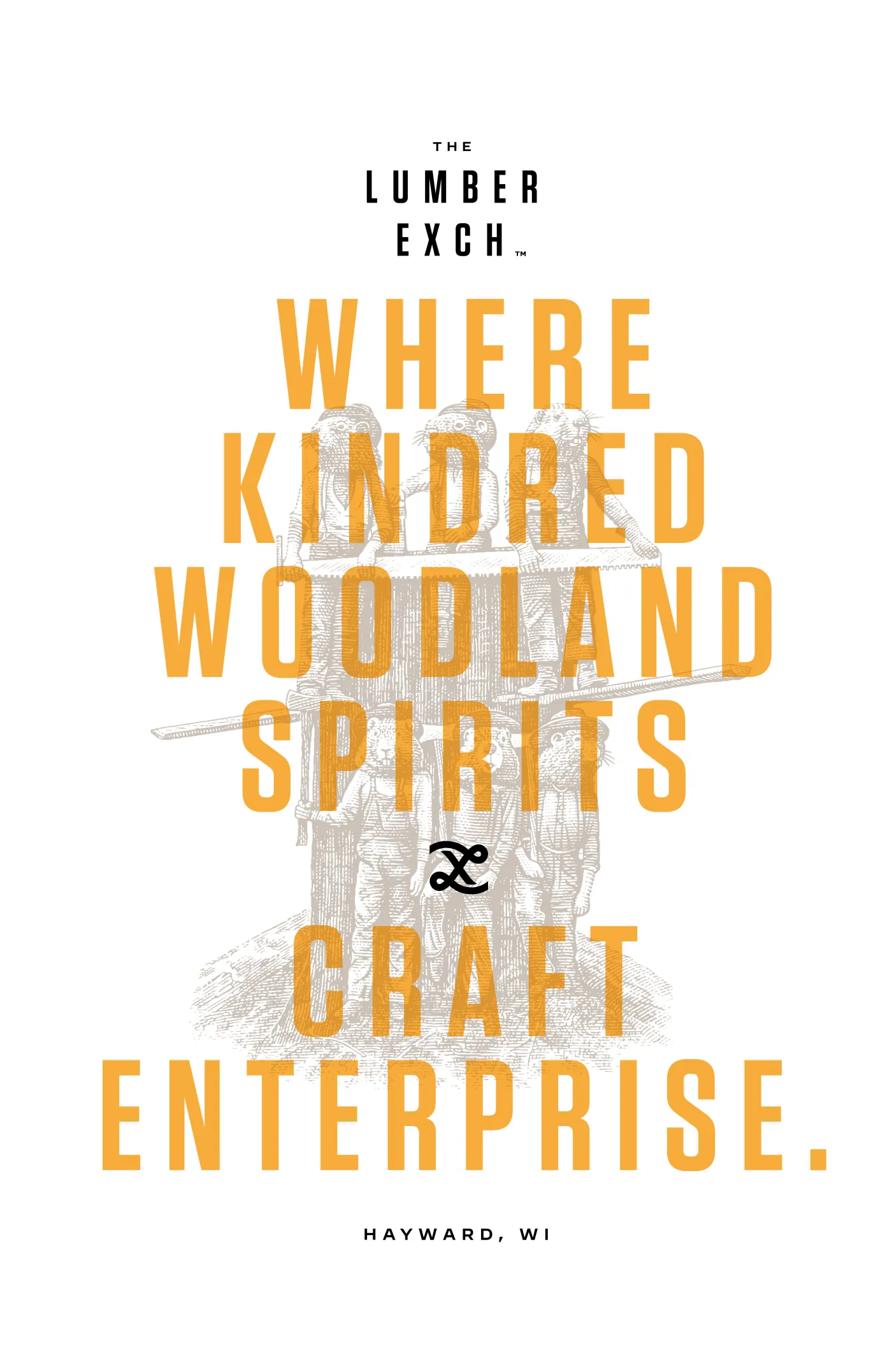
A wall is a stage.
The poster is the brand at full volume. Tungsten dominates the space, the Illustrative Mark anchors the composition, and a single sentence of Decimal does the work that doesn’t need shouting. We treat poster moments as small architectural events — for openings, founding-member kits, season announcements, and Main Street window installations.
The rule. One headline, one image, one quiet line of supporting copy. If a poster has more than that, it isn’t a poster anymore — it’s a flyer, and a flyer belongs somewhere else.
Featured · 02 — Merchandise
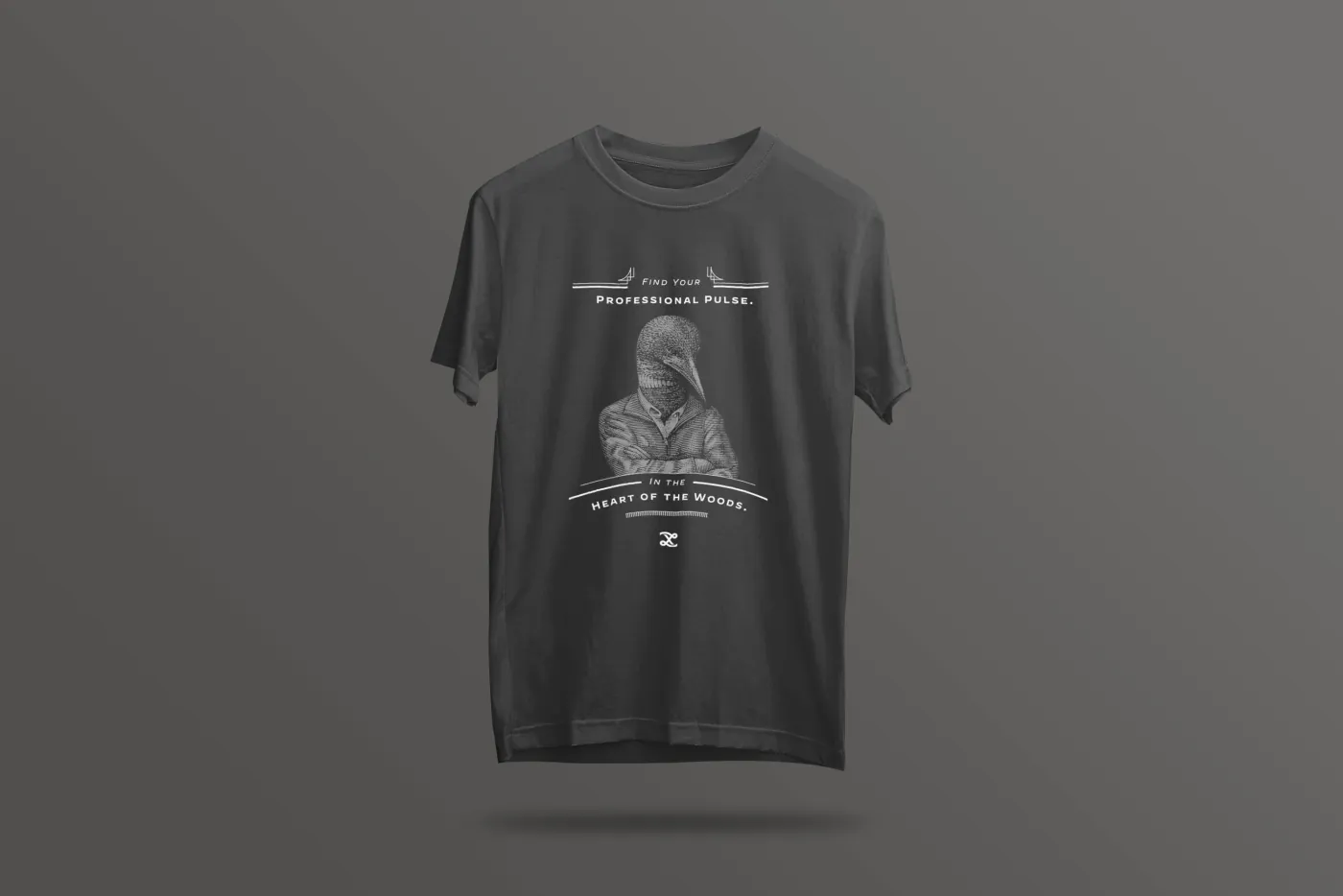
Worn, held, carried.
Apparel and small goods are the brand’s most personal applications — somebody chose to wear them or use them every day. The mark sits singular and centered; nothing else competes.

Featured · 03 — Field & outdoor
On the trail, on the lake.
The brand belongs outside, too. Water bottles, bike kit, day packs, paddle gear — the system has to read at speed, at distance, and with a hand on it. Bark fields with the Axe sitting alone work better here than the full Wordmark.
Featured · 04 — Application studies
The brand at scale.
Early studies of the brand applied across print, signage, and large-format applications — proof that the system holds together at any size.